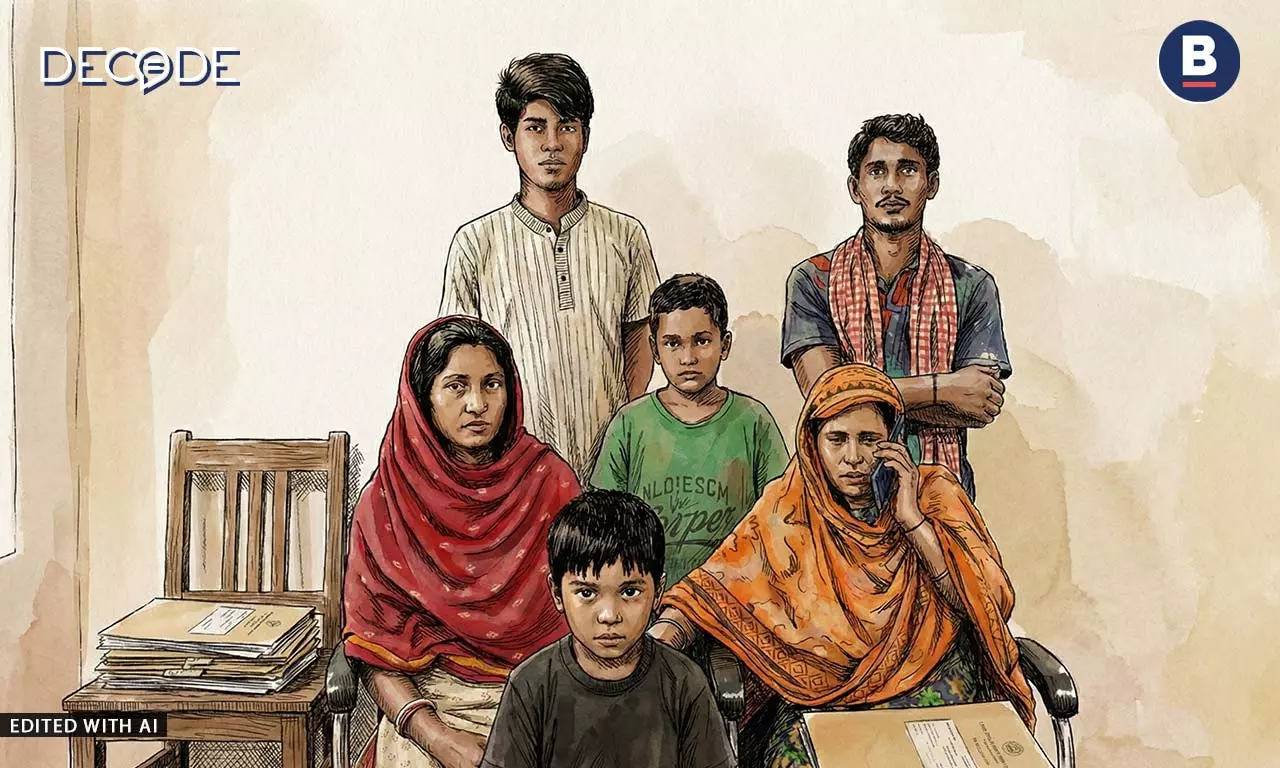
Decode analysed earnings data shared by 340 gig workers across six Indian cities. The median take-home pay was lower than the minimum wage. The platforms continue to scale.
Ramesh Kumar, 29, has been delivering food for three competing platforms simultaneously for four years. He has never met his employer. He has never been in the same room as the system that decides whether he gets orders — or doesn't. Four years on, the platforms still call him a partner. He calls himself a worker.
The Promise of the Flexible Future
In 2015, Ola's recruitment posters in Bengaluru promised something radical: 'Be your own boss. Earn on your own schedule. No boss, no office, no ceiling.' Within months, tens of thousands of young men — many of them migrants from Uttar Pradesh, Bihar, and Odisha — had signed up as 'driver-partners', drawn by the language of freedom and entrepreneurship.
By 2025, India's platform economy had grown to encompass more than 15 million workers across ride-hailing, food delivery, domestic services, and on-demand logistics. The consulting firms called it a revolution in flexible work. The workers who powered it — collecting, delivering, driving — called it something else entirely.
An Invisible Manager
Ramesh switches between three apps every few minutes to chase the best incentive rate. The algorithm determines who receives the high-value orders, who gets penalised for late deliveries and cancellations, and — most critically — who gets 'temporarily suspended' without warning, explanation, or appeal.
There is no HR department at the end of the phone. There is no grievance process. There is only the app, and what the app decides. Five other delivery workers Decode interviewed described identical experiences: suspensions that arrived without explanation, reinstatements that arrived without apology, and a quiet downgrading of their account's reach that they could not contest because no one had told them it had happened.
When the Numbers Stop Adding Up
Decode analysed earnings data shared by 340 gig workers across six Indian cities over six months. The median take-home pay — after platform fees, fuel, vehicle maintenance, and EMI payments on financed motorcycles and cars — was ₹9,200 per month. The national minimum wage for unskilled labour in most Indian states is higher.
More than 60% of respondents had borrowed money to purchase or finance the vehicle required to work on the platform. When orders slow — during rain, during Eid, during the months between festival seasons — the debt does not slow with them. Three workers described taking second gig jobs to pay off debts accumulated from the first.
You can work twelve hours and still owe money to the platform at the end of the day. That is not employment. That is something else entirely.
Organising Against the Machine
In November 2025, thousands of delivery workers across twelve cities logged off simultaneously for six hours — the first coordinated platform-worker strike in Indian history. Their demands were precise: a guaranteed floor price per delivery, mandatory accident insurance, and the legal right to know why their accounts had been suspended.
The Indian Federation of App-based Transport Workers has been pushing for regulatory recognition since 2020. Five years on, the government's long-promised Gig Worker Welfare Code remains in draft. The platforms insist their workers are partners, not employees. The workers are still waiting to find out what that distinction means for the people who bleed for it.
The Indian government's draft Code on Social Security, 2020 promised to extend benefits — provident fund contributions, gratuity, accident cover — to platform workers for the first time. In February 2026, that draft has been in circulation for six years. The Rajasthan Platform-Based Gig Workers (Registration and Welfare) Act — the only operational state law addressing the sector — covers fewer than 12,000 of the country's estimated 15 million gig workers.
Meanwhile the platforms continue to scale. Zomato and Swiggy together processed over 1.5 billion food delivery orders in 2025. The combined valuation of India's three largest ride-hailing companies crossed eight billion dollars. Adjusted for inflation, the median gig worker's take-home earnings fell for the third consecutive year.
Ramesh Kumar still delivers food. He works seven days a week, usually twelve hours each. Some days the algorithm is generous with order assignments; most days it isn't. 'I keep thinking things will get better,' he told Decode from the pavement outside a Bengaluru apartment building, waiting for his next pickup notification. 'The app keeps telling me I have potential. I don't know what that means anymore.'
Edited by Adrija Bose